

Key Takeaways
- Counter surfing is unsafe because dogs can grab human food like chocolate, grapes, onions, xylitol, cooked bones, alcohol, or dangerous items like hot pans and knives.
- Dogs counter surf because of habit, curiosity, powerful food smells, boredom, and unclear boundaries.
- A practical way to stop dog counter surfing is to combine prevention, clear counters, dog obedience, and impulse control.
- Commands like place, off, leave it, sit, stay, and recall help dogs make better choices around the kitchen counter.
- Consistency from every family member is essential, and professional training may help if the habit is strong.
Counter surfing is when a dog jumps up, puts paws on the counter, or tries stealing food from countertops, tables, or a coffee table. If you want to stop dog counter surfing, the goal is not just to protect your meals. It is to build safer house manners.
This behavior is common in puppies, adult dogs, and even older pets. Most dogs are not being spiteful. They are following scent, habit, and opportunity. With structure, training, and clear boundaries, many dogs can learn calm behavior around food. For owners who need more support, Off Leash K9 Dog Training Murrieta can help build better obedience and house manners.
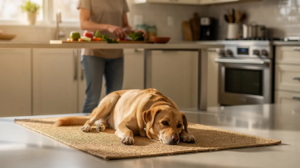
Why Dogs Counter Surf
Counter surfing is rooted in normal dog behavior. Dogs are natural scavengers, so they are motivated to search for food wherever it might be available, including the trash, floor, table, counters, and items left within reach.
Dogs counter surf because they have learned that kitchen counters are an easy source of food, and this behavior is reinforced when they are successful in finding food there. One sandwich, a roast pan, or a snack bag can create a persistent counter surfer because every success teaches the idea that the counter might pay again.
A dog’s powerful sense of smell can trigger interest even when counters appear clean. Lingering food scents from cooking, bacon grease, chicken, or leftover pizza may still be present. Cleaning surfaces after cooking helps remove residual scents that tempt dogs.
A bored dog is more likely to seek snacks, so engagement is critical. Use meals, a safe chew, a toy, training games, or place training to create more opportunities for success away from the kitchen. Other dogs may surf because humans feed scraps in the kitchen, which blurs boundaries and makes the house rules unclear.
Counter surfing is also a safety issue. Many common foods can be unsafe for dogs, and kitchens may also contain sharp, hot, or breakable items. Risks include chocolate, grapes, onions, xylitol in sugar-free products, alcohol, cooked bones, hot stovetops, knives, glass dishes, and heavy cookware.
How To Stop Dog Counter Surfing With Structure
To stop counter surfing, start with management. If your dog keeps finding food on the counter, the habit will continue because the behavior keeps being rewarded. Clear counters, supervised kitchen time, and blocked access make it easier for your dog to learn better choices.
Here are practical steps dog owners can use this week:
- Keep counters clear of food, wrappers, unwashed dishes, bread bags, butter, and tempting clutter.
- Put leftovers, bread, snack bags, peanut butter jars, and other tempting foods in cabinets, sealed containers, or the fridge.
- Keep food off the counters when you cannot supervise your dog.
- Avoid feeding your dog in the kitchen so counters do not become a good place to search.
- Always secure trash cans with tight, locking lids to prevent dogs from scavenging.
- Use a baby gate, crate, exercise pen, or closed door to restrict access while cooking or when unsupervised.
Next, teach an alternative behavior. Training your dog to go to their bed, lie on a mat, or stay out of the kitchen can help prevent counter surfing. Creating a structured environment by guiding your dog to a designated spot while cooking helps them learn self-control and reduces temptation.
Choose a good place, such as a dog bed just outside the kitchen. Reward calm behavior there with a dog treat, chew, praise, or stuffed toy. Start with short sessions, then build to longer periods during real cooking.
Build impulse control with simple games:
- Start with low-value food or kibble on the floor.
- Say “leave it,” then reward when your dog looks away, backs up, or checks in with you.
- Practice near the counter only after the dog understands the game.
- Reward consistently when all four paws stay on the floor near counters or tables.
Obedience Skills That Support Better House Manners
Reliable dog obedience is the backbone of better house manners. Commands are not tricks. They create clear communication so the dog understands what to do instead of jumping, grabbing, or standing near the counter. Structured dog training can also help owners build clearer rules, impulse control, and everyday obedience at home.
Use these skills:
| Command | How |
| Place | Teach your dog to go to a designated spot, like a mat or bed, and stay there calmly. Reward calm behavior with treats or praise. This helps your dog learn to settle away from the counter. |
| Off | Use this command to tell your dog to get down from furniture or counters. Reward compliance immediately to reinforce the behavior. |
| Leave It | Teach your dog to ignore food or items on the counter. Start with low-value treats on the floor and reward when your dog looks away or backs up. Gradually increase difficulty. |
| Sit | A basic command that helps focus your dog’s attention and can be used to interrupt counter surfing attempts. |
| Stay | Helps your dog maintain position and resist temptation near counters. Combine with a place or sit for the best results. |
| Recall | A reliable recall lets you call your dog away from the counter or kitchen area before they jump up. Practice regularly in low distraction environments first. |
Using positive reinforcement, such as treats, praise, or clicker training, can help make the learning process clearer. Dogs do better when they understand what is expected and are rewarded for calm behavior away from tempting counters. Over time, these commands support impulse control and clearer household boundaries.
Consistency is key. Every family member should use the same commands and reward calm behavior. Mixed signals confuse dogs and slow progress.
Common Mistakes To Avoid
When trying to stop dog counter surfing, avoid these pitfalls:
- Yelling or punishing after the fact: This often creates confusion because the dog may not understand what behavior caused the correction. Prevention, redirection, and rewarding the right behavior are more useful.
- Leaving food or tempting items on counters: This reinforces the habit and makes training harder.
- Inconsistent rules among family members: Everyone must enforce the same boundaries and commands.
- Ignoring the environment: Failing to manage access or remove temptations will undermine training.
- Expecting instant results: Changing habits takes time and patience.
If the behavior persists despite your efforts, professional training can help. Trainers use structured processes and tools tailored to your dog’s needs.
Final Thoughts
If you want to stop dog counter surfing and create a safer, calmer home, start with clear boundaries, consistent obedience training, and managing the environment to remove temptations. Teaching commands like place, leave it, and off supports better house manners and impulse control. Remember, every family member’s consistency is key to success. If the habit feels too strong or you need extra support, professional training can provide the structure and skills your dog needs to thrive. Don’t hesitate to get help to build lasting calm behavior and safe kitchen habits.

FAQ
How long does it take to stop a dog from counter surfing?
It depends on your dog’s age, history, food motivation, and training consistency. Some dogs improve quickly when counters stay clear and rules are consistent, while others need weeks or months of patient practice.
Can I use punishment to stop counter surfing?
Punishment after the fact often creates confusion because your dog may not understand what behavior caused the correction. Prevention, redirection, and rewarding better choices are usually more effective.
What if my dog is very food motivated and keeps trying?
Use high-value rewards for calm behavior and increase management tools like baby gates or crates. Professional trainers can also help with specialized strategies.
Is clicker training necessary?
Clicker training can help mark good behavior clearly, but it is not required. Many dogs respond well to consistent verbal praise and treats.
When should I seek professional help?
If counter surfing persists, becomes dangerous, or you feel overwhelmed, a professional trainer can offer personalized support. You can review dog training pricing to compare program options and decide what level of support may fit your dog’s needs