
Introduction
When dog owners start researching the cost of dog training, the first thing most notice is how widely the numbers vary. One program might be a few hundred dollars. Another could be several times that. Without context, the difference can feel confusing, even discouraging.
But pricing in dog training is not arbitrary. It reflects the depth of the program, the trainer’s background, the format of instruction, and what the program is actually designed to accomplish. Understanding those factors gives you the ability to compare programs honestly, set realistic expectations, and choose an approach that serves your dog rather than just your budget.
This guide breaks down what shapes dog training investment in Murrieta and the surrounding area, how the most common program types compare, and what questions to ask before you commit.
Key Takeaways
- The cost of dog training is shaped by format, program length, trainer experience, and your dog’s current behavior level
- Private lessons, puppy training, and board and train programs serve different goals and different types of dog owners
- Lower-cost general training options may offer a starting point, but they may not address individual behavioral challenges
- The right program is the one that matches your dog’s needs and your lifestyle, not simply the one with the lowest number
- Asking clear questions before enrolling protects your investment and helps set your dog up for long-term success
Why the Cost of Dog Training Reflects More Than Just Time
One of the most common misunderstandings about the cost of dog training is treating it the same way you would a service charged purely by the hour. Dog training is not like hiring a handyman. The investment you make reflects the structure of the program, the trainer’s methodology, and the environment where training actually takes place.
A trainer who works with your dog at a distraction-free indoor facility delivers a different experience than one who takes your dog into busy public environments like shopping centers, parks, and sidewalks crowded with people and other animals. Both involve time. But only one is testing and proving your dog’s behavior where it actually counts.
The same logic applies to program structure. A short introductory package that covers a handful of commands is a genuinely different service from a multi-week immersive program that addresses reactivity, builds impulse control, and includes a full owner coaching session before your dog comes home. Longer, more structured programs carry a higher investment for the same reason that a comprehensive medical treatment costs more than a one-time consultation. Depth has value.
Location can also play a role. In Southern California communities like Murrieta, Temecula, and the surrounding Riverside County area, pricing may reflect travel, trainer availability, program structure, and the level of support included. That is why it helps to compare what each program includes, how training is delivered, and how owners are coached after the program ends.
Common Factors That Affect Dog Training Prices
Before comparing programs, it helps to know what the investment actually covers. These are the variables that most consistently shape what you will pay for professional dog training.
Trainer Experience and Program Structure: Trainers who have worked with a wide range of breeds, obedience goals, and behavior challenges may carry a higher investment level because their programs require more planning, timing, and owner coaching. Experience matters when your dog’s behavior affects daily life, especially with leash reactivity, poor recall, jumping, pulling, or serious behavior concerns.
Training Format Private lessons, in-home training, puppy programs, and board and train programs carry different price points because they deliver different levels of structure and personalization. One-on-one sessions and immersive board and train programs require more trainer time, attention, and owner coaching than a general introductory option.
Program Length A two-week board and train program requires more from a trainer than four weekly lessons. Longer programs that work through advanced commands, address behavioral issues, and proof training in high-distraction environments reflect that scope in their cost.
Your Dog’s Current Behavior Basic obedience is a different scope of work from behavior-focused training. A dog that needs help with sit, place, recall, and leash manners is a different case from a dog managing leash reactivity, fear-based responses, or aggression around triggers. Programs designed to address reactivity or more serious behavior concerns are more involved, and that involvement is reflected in how they are structured and priced.
What Comes After the Program Ends Some programs include follow-up support, owner coaching, and access to refresher sessions. Others end when the final session is complete. The long-term value of a program depends significantly on whether you leave it prepared to maintain your dog’s progress at home.
In-Home vs. Trainer-Led Program Structure In-home training requires a trainer to travel to your location and adapt the session to your household environment. Board and train programs require daily structure, care, training time, and a transition plan for the owner. Both serve legitimate purposes depending on your dog’s needs, your schedule, and the level of support you want.
Comparing Private Lessons, Puppy Training, and Board and Train
Understanding what each program type is designed to accomplish helps you make a more informed decision from the start.
Private Lessons
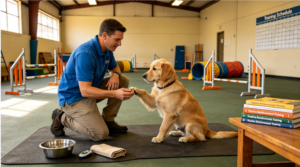
Private lessons place you directly in the training process alongside your dog and a professional trainer. They are well-suited for owners who want to be hands-on, who have a consistent schedule to practice between sessions, and whose dogs need personalized support with obedience, leash manners, household behavior, or specific training goals.
The success of private lessons depends heavily on the owner’s follow-through. Trainers teach the skills during sessions, but consistent daily reinforcement at home is what produces lasting results. If your schedule and commitment level support that model, private lessons can be a highly effective choice.
Puppy Training
Starting early is one of the best decisions a new dog owner can make. Puppy training programs are most effective when started as early as eight weeks of age. The goal extends beyond teaching basic commands. It is about building confidence, establishing healthy associations with people and environments, and preventing the kinds of behavioral patterns that become much harder to address later.
Well-structured puppy programs address crate training, potty training, impulse control, leash introduction, and socialization with people and other animals. A puppy that moves through a solid early training program arrives at adulthood with a foundation that makes everything else easier, for both of you.
Board and Train
Board and train programs are a more intensive training option and are often misunderstood. Your dog stays with a professional trainer for a set period, with core programs commonly ranging from 14 to 21 days and more advanced behavior-focused options taking longer. During that time, your dog receives structured daily training in controlled settings and real-world environments.
This format can be a strong fit for dogs that need more structure, for owners who have limited availability for weekly sessions, or for dogs that benefit from consistent daily practice. A dog with leash reactivity, for example, may need a controlled training plan, steady repetition, and owner coaching to help build calmer responses around triggers.
The investment for board and train reflects the trainer’s daily work, structured practice, care, equipment, program length, and owner coaching. A well-run program should also include a thorough transition session, so you understand how to reinforce your dog’s training once they return home.
Group Classes
Some dog owners compare private or board and train programs with lower-cost general training options. These may be helpful for basic exposure or simple skills, but they are not always the right fit for dogs with reactivity, anxiety, or established behavior problems. For owners who need a more personalized plan, private lessons, puppy foundation training, or board and train may offer a better level of structure and support.
Questions to Ask Before Choosing a Dog Training Program
Not every program will be the right fit. Asking direct questions before you enroll protects your investment and sets clear expectations for both you and the trainer.
What specific outcomes does this program target? A well-defined program should tell you exactly what your dog will learn, what environments training will take place in, and how behavior issues are addressed within the program structure.
What methodology does this trainer use? Ask the trainer to explain their approach in plain terms. Understanding the philosophy behind the training helps you evaluate whether it aligns with your goals and your dog’s needs.
Does this program include real-world distraction training? Training that only happens in quiet, controlled settings does not prepare your dog for real life. Ask whether training takes place in public environments where distractions are present.
What experience does this trainer have with my dog’s specific challenges? If your dog is reactive, fearful, or has shown aggression, ask directly whether the trainer has worked with those cases. Ask what that experience looks like in practice.
What is included after the program ends? Follow-up support and owner coaching are meaningful parts of a program’s overall value. Ask whether these are built into what you are paying for and what ongoing support looks like.
Will I be equipped to maintain my dog’s progress at home? The best programs treat the owner as part of the solution. Ask how you will be coached to carry the training forward once formal sessions are complete.
Can I see results from real clients? Before-and-after videos, reviews, and client testimonials can help you understand the type of work a trainer does. These examples should support your decision, but they should still be paired with a consultation and clear expectations for your individual dog.
Final Thoughts
The cost of dog training is a reasonable starting point for any conversation, but it should not be the ending point. The more useful question is what a program actually delivers and whether it is the right fit for where your dog is right now.
A program priced to match its scope, delivered by an experienced trainer in realistic environments, and built to equip you as an owner, will provide more lasting value than a cheaper option that addresses the surface without building the foundation. The benefits of professional training can extend well beyond the program itself. A dog with stronger obedience, better leash manners, and clearer structure is often easier to manage, calmer in daily routines, and more enjoyable to live with.
If you are exploring dog training options in the Murrieta area and want guidance on which program fits your dog’s situation, a free phone consultation is a helpful place to begin. A trainer can discuss your dog’s current behavior, listen to your goals, and recommend a path forward based on your needs. Reach out today to get started.
Frequently Asked Questions
- What is the most accessible dog training option in terms of investment?
The most accessible option depends on what is currently available and what your dog needs. For many owners, shorter private lesson packages or puppy foundation programs may be a practical starting point. Dogs with specific behavior concerns, reactivity, or more advanced goals may need a more structured private or board and train program.
- Is board and train worth the investment?
For many dog owners, board and train can be worth the investment because it provides structured daily training, consistent handling, and owner coaching at the end of the program. It can be a strong option for dogs that need more support than weekly lessons or for owners whose schedules make regular practice difficult. The best fit depends on your dog’s age, temperament, behavior history, and training goals.
- Does my dog’s age affect which training program makes sense?
Yes. Puppies benefit most from early socialization and foundational programs that build confidence and healthy habits before unwanted behaviors develop. Older dogs may require behavior modification work alongside obedience training, depending on what habits have already formed. A qualified trainer can assess your dog’s current situation and recommend the most appropriate path.
- Why do dog training programs vary so much in investment level?
The variation reflects genuine differences in what each program delivers: trainer credentials, program depth, number of sessions, training environments, behavioral complexity addressed, and what follow-up support is included. Investment level alone is not a reliable measure of quality. Program structure, trainer experience, and documented results are more meaningful indicators.
- How do I know if a dog training program in Murrieta is the right fit?
Look for programs with clearly defined outcomes, a clear training process, owner coaching, and real client results you can review. A trainer should take time to understand your dog before recommending a program and should be willing to answer your questions before you commit. That is where a better fit begins.