

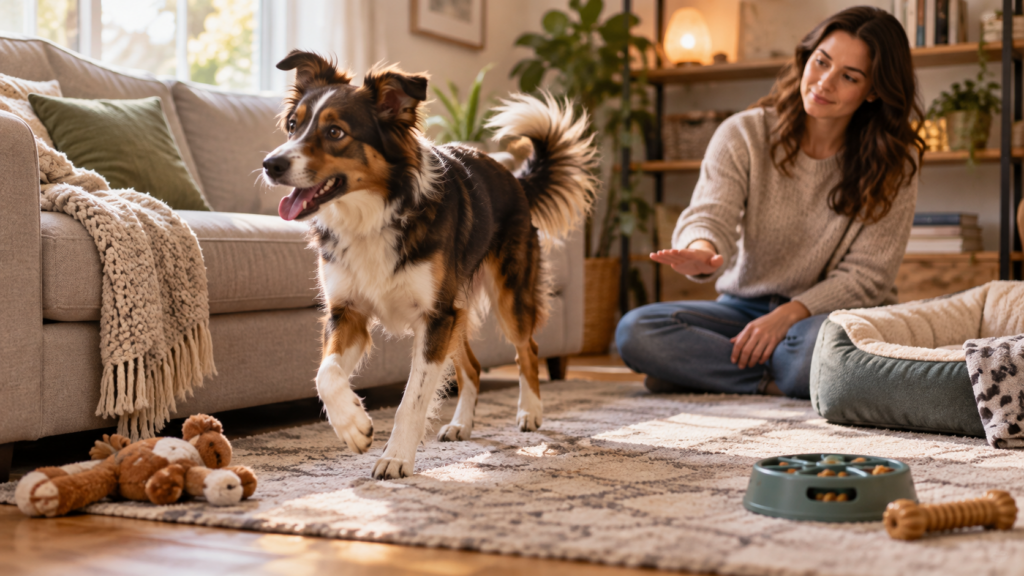
You sit down after a long day, and your dog is still pacing, whining, or dropping a toy in your lap for the fifth time. If your dog won’t settle down at home, it can feel like you never get a break. It can also leave you wondering whether something is wrong.
In most cases, a dog that can’t relax is missing a skill, not a personality trait. Calm is something dogs can learn, and the right mix of structure, outlets, and practice makes it easier.
Why Your Dog Won’t Settle Down at Home
Most dogs have more than one reason for staying wound up. Here are the most common ones.
Excess Energy
A dog with too little exercise or activity may have a hard time switching off. Young dogs and high-energy breeds are especially prone to this.
Lack of Structure
Without clear expectations, a dog has to guess what is allowed. Many dogs stay on alert because they don’t know when it’s time to relax.
Inconsistent Routines
A predictable daily routine around feeding, walks, play, training, and rest can help dogs understand what to expect and when it is time to settle. That uncertainty often shows up as dog pacing in the house or constant checking in with you.
Overstimulation
Busy homes, frequent visitors, nonstop play, and too many activities can keep a dog amped up. Some dogs become more frantic, not calmer, when they are overtired.
Attention-Seeking
If barking, nudging, or bringing toys gets a response, dogs learn it works. Even scolding can count as attention.
Anxiety
Some dogs struggle to relax because they feel unsure or stressed. Panting, shadowing you, or being unable to lie down can be signs.
Difficulty With Impulse Control
Dogs with limited impulse control react to every sound, movement, and opportunity. Without practice at waiting and pausing, calm behavior is hard.
If pacing or restlessness is sudden, intense, or seems tied to discomfort, check with your veterinarian first.
Signs Your Dog Can’t Relax at Home
- Pacing from room to room
- Difficulty lying down or staying down
- Following you everywhere
- Whining, sighing, or repeated demand behavior
- Jumping up for attention or grabbing toys
- A dog who won’t calm down even after exercise
Build Structure and a Consistent Routine
Dogs settle more easily when their day is predictable. You don’t need a strict schedule, just a repeatable pattern.
- Keep meal times and walks roughly consistent
- Add short training sessions to the day
- Build in planned rest periods, not just play
- Use the same cues and house rules across the family
A routine tells your dog when it’s time to be active and when it’s time to rest.
Balance Exercise and Mental Enrichment
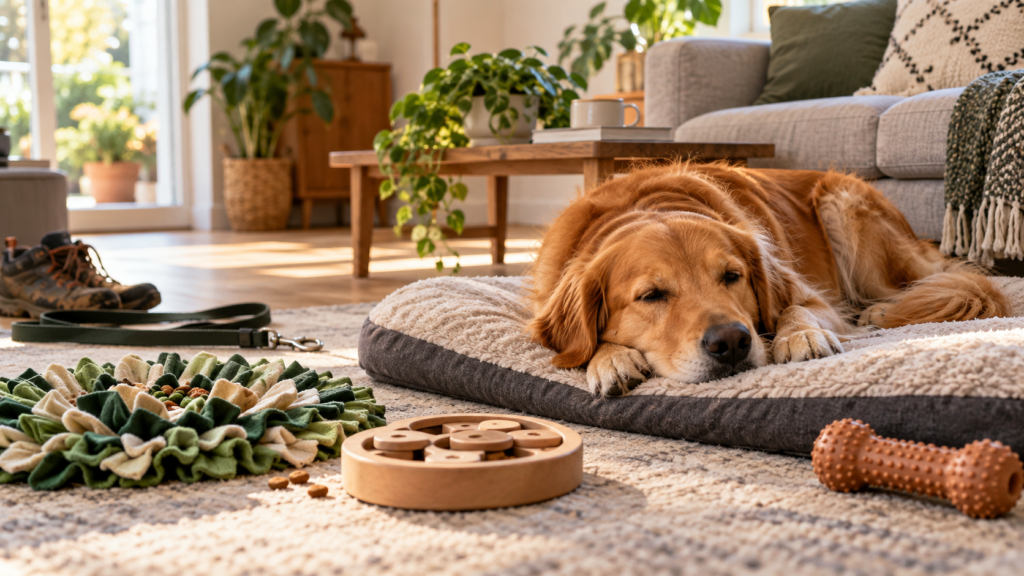
Exercise helps, but more intensity isn’t always better. High-arousal games like nonstop fetch can leave some dogs more revved up.
Mix in calmer outlets:
- Sniff-focused walks
- Food puzzles, snuffle mats, and chews
- Scent games around the house
- Short obedience practice
Finish active time with a quiet activity so your dog learns to wind down.
How to Teach a Dog to Settle
Calm dog behavior doesn’t happen by accident. Teach it on purpose, when your dog is already fairly relaxed.
- Pick a mat or bed and keep it in a consistent spot.
- Reward your dog for stepping onto it and lying down.
- Give calm treats while your dog stays down.
- Gradually wait longer between rewards.
- Add a cue like “settle” once the behavior is steady.
- Release your dog with a word like “okay.”
Keep sessions short and end on a win. Add distance, time, and household activity slowly as your dog improves. If your dog keeps popping up, make the exercise easier instead of repeating the cue.
Practice Impulse Control for Dogs
Impulse control is the skill behind calm. These everyday exercises help:
- Wait at doors: Your dog pauses until released.
- Wait for food: Your dog holds a sit before the bowl goes down.
- Leave it: Reward your dog for ignoring a tempting item.
- Place: Practice staying on a spot while things happen around them.
Each one teaches your dog that patience pays off.
Handle Attention-Seeking Without Rewarding It
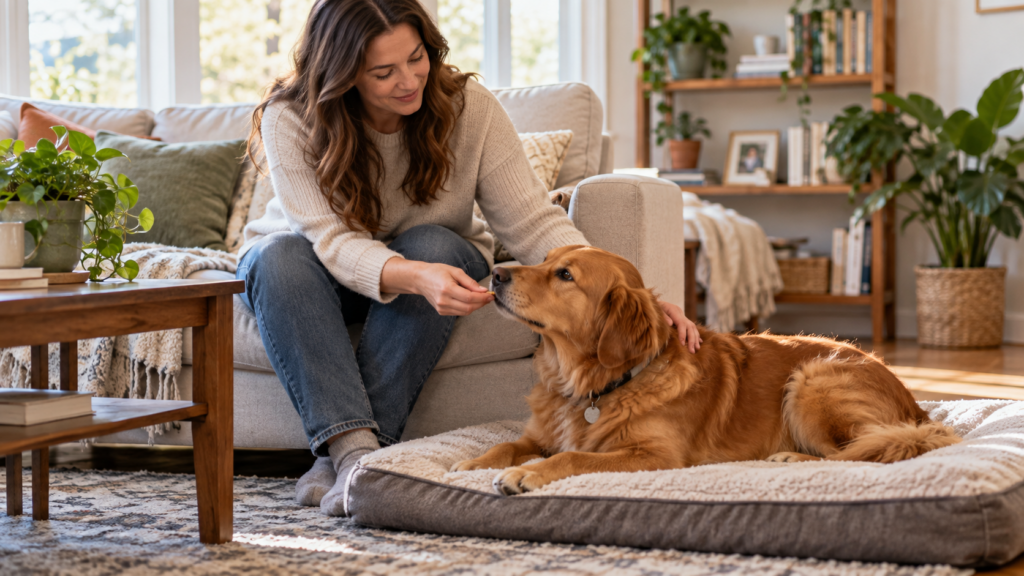
When your dog nudges, barks, or paws at you, try to avoid giving big reactions. Wait for a moment of calm, then reward it. You can also send your dog to the mat and give a chew. The goal is to make calm behavior the most reliable way to get what they want.
Common Mistakes to Avoid
- Relying on exercise alone
- Rewarding pacing or demand behavior with attention
- Repeating cues over and over
- Skipping naps and downtime
- Expecting calm without teaching it
- Changing rules from person to person
- Ignoring signs of stress or discomfort
When Professional Help May Make Sense
If your dog won’t calm down despite steady practice, seems anxious or distressed, or the behavior is affecting daily life, consider working with a qualified trainer. They can observe your dog, identify what is driving the restlessness, and help you build a plan that fits your home.
Frequently Asked Questions
Why does my dog pace in the house and not relax?
Dog pacing in the house can come from excess energy, boredom, stress, or an unpredictable routine. Some dogs also pace when they are overstimulated or overtired. If the pacing is sudden, constant, or seems tied to discomfort, talk with your veterinarian.
How do I teach a dog to settle?
Start by rewarding your dog for lying down on a mat or bed. Gradually lengthen the time between treats, then add a cue like “settle” once the behavior is steady. Keep sessions short and practice when your dog is already fairly calm.
Is exercise enough if my dog won’t calm down?
Exercise helps, but it is rarely the whole answer. Structure, mental enrichment, rest time, and teaching calm behavior all matter. Some dogs also need practice switching off after activity.
Can older dogs and puppies learn to settle?
Yes, dogs of many ages can learn to relax with consistent practice. Puppies may need shorter sessions and more naps, while older dogs may need extra comfort. If an older dog becomes restless suddenly, a veterinary check is a good first step.
Why does my dog follow me everywhere and not settle?
Some dogs stay close because they are seeking attention, feel unsure, or have learned that staying near you pays off. Teaching a mat or Place behavior gives your dog a clear spot to relax. Rewarding calm moments, even short ones, helps build the habit.
Final Thoughts
A dog that won’t settle down at home isn’t being difficult on purpose. With structure, balanced exercise, impulse control practice, and consistent rewards for calm, most dogs can learn to relax more easily. If you feel stuck, a professional trainer can offer guidance and support tailored to your dog.