
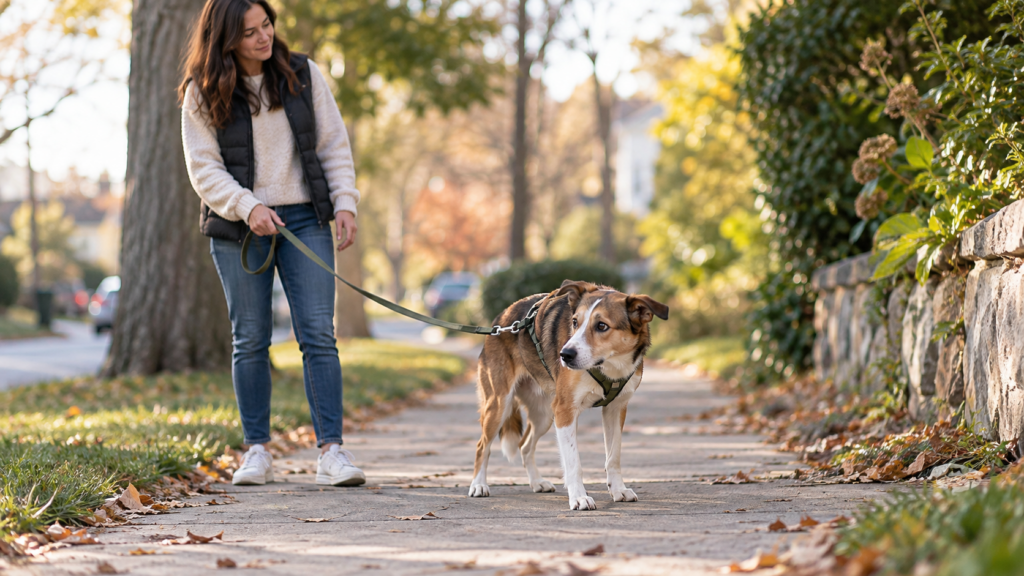
You clip on the leash, step outside, and your dog suddenly stops. Maybe he plants his feet, stares, or lies down and won’t budge. If your dog freezes on walks, it can be stressful and confusing, especially if you were expecting a relaxing stroll.
A freeze is communication. Your dog is telling you something about how he feels, and understanding the reason is the first step to helping him move forward calmly.
Why a Dog Freezes on Walks
Most freezing comes from one or more of these causes.
Fear or Uncertainty
Loud trucks, barking dogs, strange objects, or unfamiliar people can feel overwhelming. Freezing can be part of fearful body language, along with lowering the body, tucking the tail, avoiding eye contact, or trying to retreat. A dog scared on walks may stop to assess the situation or avoid moving closer.
Overstimulation
Too much happening at once can overload a dog. Busy sidewalks, strong smells, and constant movement may lead a dog to shut down.
Unfamiliar Environments
New routes, new surfaces, or new neighborhoods can make a dog hesitate. Puppies and newly adopted dogs often need extra time to feel comfortable outside.
Leash Pressure
Tight leashes, pulling, or sudden tugs can make walking feel uncomfortable or confusing. Some dogs respond by stopping altogether.
Fatigue
Long walks, hot weather, or too much activity can leave a dog tired. Slowing down or stopping may be a way to say he’s had enough.
Pain or Discomfort
Sore joints, paw problems, or other physical issues can make walking unpleasant. If your dog refuses to walk suddenly or seems uncomfortable, a veterinary check is a good first step.
Lack of Confidence
Dogs with limited outdoor experience may struggle to feel safe. Without practice, even normal walks can feel like a lot.
Fear, Freeze, or Other Reason? What to Watch For
Body language helps you tell the difference.
- Fear: Stiff body, tucked tail, wide eyes, lowered head, trying to turn back
- Overstimulation: Panting, scanning everything, difficulty responding to you
- Sniffing pause: Relaxed body, nose down, easily moves again
- Discomfort: Limping, licking paws, reluctance to move that comes on suddenly
Track when and where the freezing happens. Patterns often point to the cause.
Training Tips to Help Your Dog Move Forward Calmly
Stay Calm and Skip the Pulling
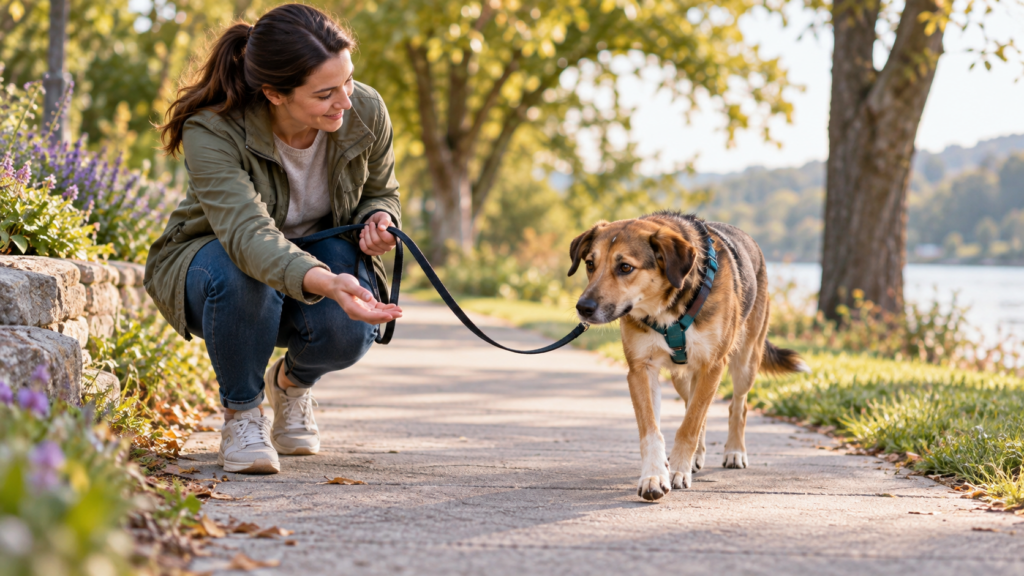
Avoid dragging or pushing your dog. Pausing, breathing, and giving him a moment can help him reset. If he seems scared, calmly turn around and move away from the trigger.
Work From a Comfortable Distance
If something specific causes the freeze, start far enough away that your dog can still notice it without panicking. Reward calm behavior, then slowly decrease distance as your dog is ready.
Use Food and Praise Strategically
Bring tasty treats and reward your dog for noticing things calmly and for moving with you. Reward movement and curiosity, not the freeze itself, so freezing doesn’t become a way to earn treats.
Shorten and Simplify Walks
Choose quieter routes and keep walks brief while your dog builds confidence. Add distance and distractions gradually.
Practice Easy Obedience Cues
Simple cues like sit, focus, and “let’s go” give your dog something to do. Short practice sessions can help leash walking problems and build dog confidence training one step at a time.
Let Your Dog Sniff
Sniffing is natural and calming. Build in sniff breaks as rewards, then use a cue to move on.
Common Mistakes to Avoid
- Forcing your dog forward: This can increase fear and damage trust.
- Rushing exposure: Too much, too soon can set progress back.
- Rewarding the freeze: Treats for stopping may teach your dog to stop more.
- Ignoring physical causes: Pain can look like stubbornness.
- Skipping practice: Confidence grows with repetition in easy settings.
- Comparing your dog to others: Every dog moves at his own pace.
When Professional Help May Make Sense
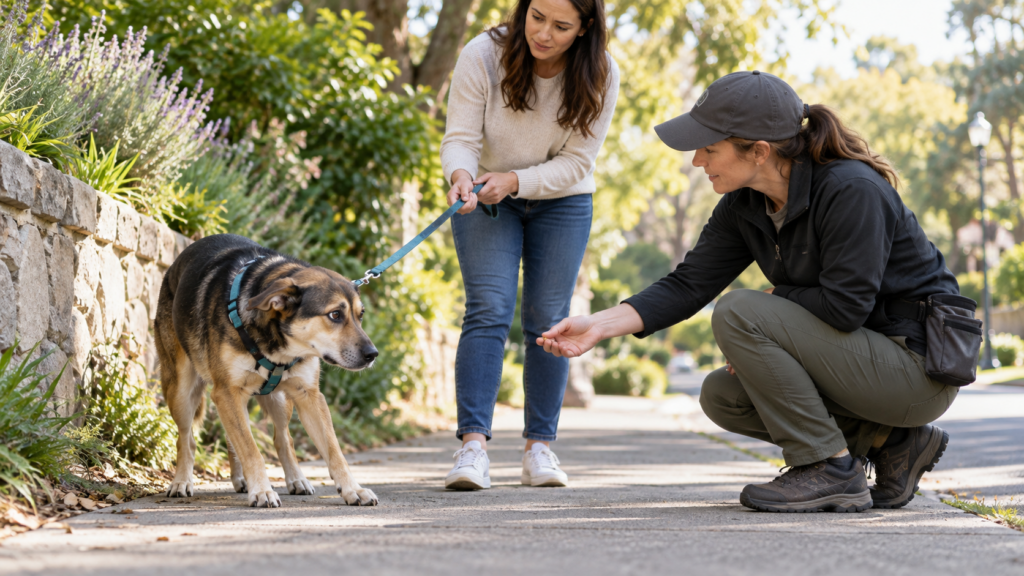
If your dog freezes often, seems very frightened, or you can’t tell what’s behind it, consider getting help. A veterinarian can rule out pain or discomfort. A qualified trainer can assess your dog’s behavior, build a plan around his triggers, and coach you through leash handling and confidence-building. Private training and obedience work can be a helpful next step if progress stalls.
Frequently Asked Questions
Why does my dog freeze on walks all of a sudden?
A sudden change can point to fear, stress, or physical discomfort. If your dog also seems sore or reluctant to move, check with your veterinarian. If there’s no medical cause, look at recent changes in routine, location, or experiences.
Should I pull my dog to keep walking?
It’s best to avoid pulling or dragging, since it can increase fear and make walking feel worse. Give your dog a moment, then guide him calmly in another direction. Reward movement once he is relaxed enough to follow.
Is it okay to give treats when my dog freezes?
Treats can help if used carefully. Reward calm behavior and forward movement, not the freeze itself. This keeps your dog from learning that stopping is how he earns food.
Can a scared dog learn to enjoy walks?
Many dogs improve with patience, gradual exposure, and consistent practice. Progress depends on the dog, the cause, and how the training is handled. A trainer can help set realistic goals.
How do I know if my dog is scared or just stubborn?
Look at body language. Fearful dogs often look tense or try to retreat, while dogs who are just sniffing or delaying look relaxed. If you’re unsure, a trainer can help you read the signs.
Final Thoughts
When a dog freezes on walks, it’s a signal, not stubbornness. Identify the cause, move at your dog’s pace, reward calm progress, and keep walks positive. If the freezing continues or feels hard to manage, consider reaching out to a professional trainer for guidance on leash walking and confidence building.