

Introduction
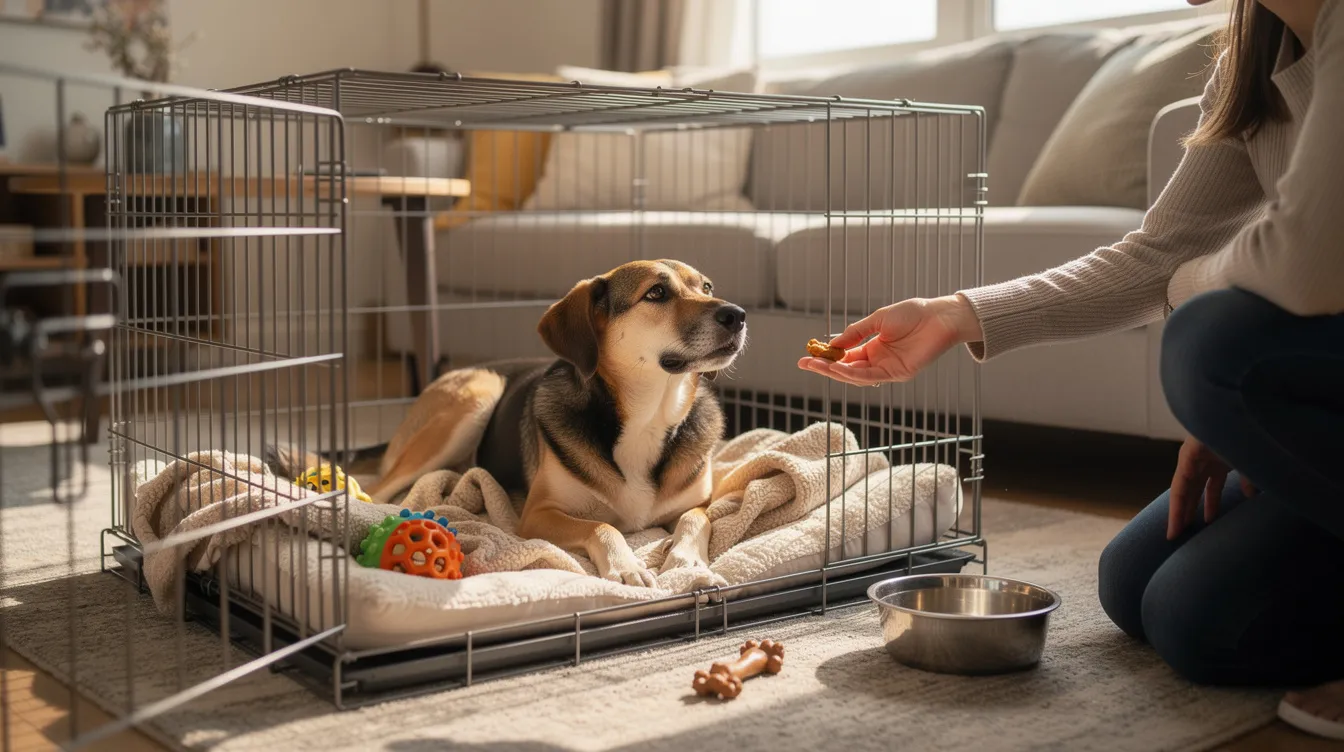
Adult dogs can be successfully crate trained at any age using positive reinforcement methods, with most dogs achieving basic comfort within 2–6 weeks of consistent practice. Whether you’ve brought home a rescue with an unknown history or you’re training an adult dog that never learned to love a kennel, the process relies on patience, proper setup, and a step-by-step approach that respects your dog’s comfort level.
This guide covers crate training for dogs one year and older, including rescue dogs, previously untrained dogs, and those with negative associations from past experiences. It’s written for dog owners in Murrieta and surrounding Southern California communities who are dealing with destructive behavior, separation anxiety, or simply need a reliable, safe space for their pet during travel, vet visits, or emergencies like natural disasters.
The direct answer: Crate training an adult dog requires gradual acclimatization and positive reinforcement. You introduce the crate with the door open, build positive associations through feeding and treats, and slowly increase confinement duration over several weeks. Adult dogs may have established habits that require patience during crate training, and an adult dog may take longer to accept a crate than a puppy-but the results are just as reliable.
By the end of this guide, you’ll understand:
- How to choose the right crate size and type for your adult dog
- The complete step-by-step training process across four phases
- How to troubleshoot common challenges like whining, escape attempts, and regression
- Realistic timeline expectations based on your dog’s background
- When to seek professional help for accelerated or specialized results
Understanding Adult Dog Crate Training Fundamentals
Training an adult dog to accept a crate is fundamentally different from working with a puppy. While puppies are essentially blank slates, adult dogs arrive with years of learned behavior, emotional associations, and ingrained routines that shape how they respond to confinement.
Why Adult Dogs Need Different Approaches
Adult dogs may resist entering the crate initially because they’ve never encountered one, or worse. After all, a previous owner used the crate as punishment. Rescue dogs often carry trauma-based crate fears rooted in histories of neglect, abandonment, or prolonged confinement. Research from Applied Animal Behaviour studies confirms that training methods emphasizing positive reinforcement-treats, praise, and patience-lead to better long-term behavioral outcomes and less stress than force-based approaches.
The crate should not be used as a form of punishment for adult dogs. Instead, the goal is building trust and creating positive associations so the dog views the crate as a retreat rather than a prison. Two behavioral science techniques drive this process: systematic desensitization (gradually exposing the dog to the crate at levels below their stress threshold) and counterconditioning (pairing crate exposure with high-value rewards to change the emotional response).
For dog owners working with a new dog from a shelter, rescue-oriented protocols recommend following the 3-3-3 rule-3 days of overwhelm, 3 weeks of settling in, 3 months of feeling truly safe-before beginning formal crate training. This decompression period allows the dog to acclimate to your home environment first.
The Den Instinct in Adult Dogs
Dogs instinctively seek small, enclosed spaces for rest and security. In the wild, canines use dens for sleeping, whelping, and retreating from threats. A crate mimics a cozy den, providing comfort for dogs when properly introduced-even for an older dog encountering one for the first time.
Proper crate training taps into this instinct by transforming an unfamiliar box into a safe and comfortable space your dog chooses voluntarily. When a dog sees its crate as a den rather than a cage, it becomes a powerful tool for reducing anxiety, managing behavior, and providing a sense of predictability in your dog’s daily routine. This understanding of natural denning behavior directly guides how we set up and introduce the crate.
Crate Selection and Environmental Setup
Before a single training session begins, getting the physical setup right makes a measurable difference. Even excellent technique can’t compensate for a poorly chosen dog crate or stressful placement.
Choosing the Right Crate Size and Type
The crate should allow standing, turning, and lying down comfortably-your dog should be able to stand without crouching and stretch out fully when resting. However, the crate size shouldn’t be so large that the dog can soil one end and sleep in the other, which undermines house training benefits. Measure your dog from nose to tail base and from floor to top of head, then add 2–4 inches in each direction.
Regarding crate type, here’s what to consider:
- Wire crate: Strong airflow, excellent visibility, foldable, and cost-effective. The wire crate is ideal for most situations, especially in Southern California’s warm climate where plastic crates may overheat. Downside: noise from clanging and potential escape risks with determined dogs.
- Plastic/airline crates: More enclosed and den-like, better for anxious dogs who find too much visibility overwhelming. Less ventilation makes them a concern in hot environments. Cornell University’s veterinary guidelines confirm they work well for travel but require careful temperature monitoring.
- Heavy-duty aluminum or reinforced metal crates: Virtually escape-proof and extremely durable. These are expensive and heavy but ideal for dogs with a history of destructive escape behavior or severe anxiety where standard crates have been compromised.
- Soft-sided / fabric crates: Lightweight and portable, suitable only for calm, fully crate trained dogs. Not appropriate for dogs with chewing behavior, escape tendencies, or anxiety.
Creating an Inviting Space
Crate placement matters significantly. Position the crate in a quiet room where the dog isn’t isolated-an area with moderate human activity so the dog doesn’t feel abandoned, but without constant noise or distractions. In Murrieta and surrounding areas, placing crates away from windows facing busy streets reduces environmental triggers like traffic noise and passing dogs.
For bedding, a crate pad or soft blanket helps create a comfortable space, but if your dog chews or has potty training issues, start without bedding to avoid hygiene problems and reintroduce it gradually. Stock up on high-value treats (freeze-dried liver, cooked chicken), a stuffed Kong or Kong filled with peanut butter, bully sticks, and your dog’s favorite toy to rotate throughout the training process.
Pre-Training Environmental Management
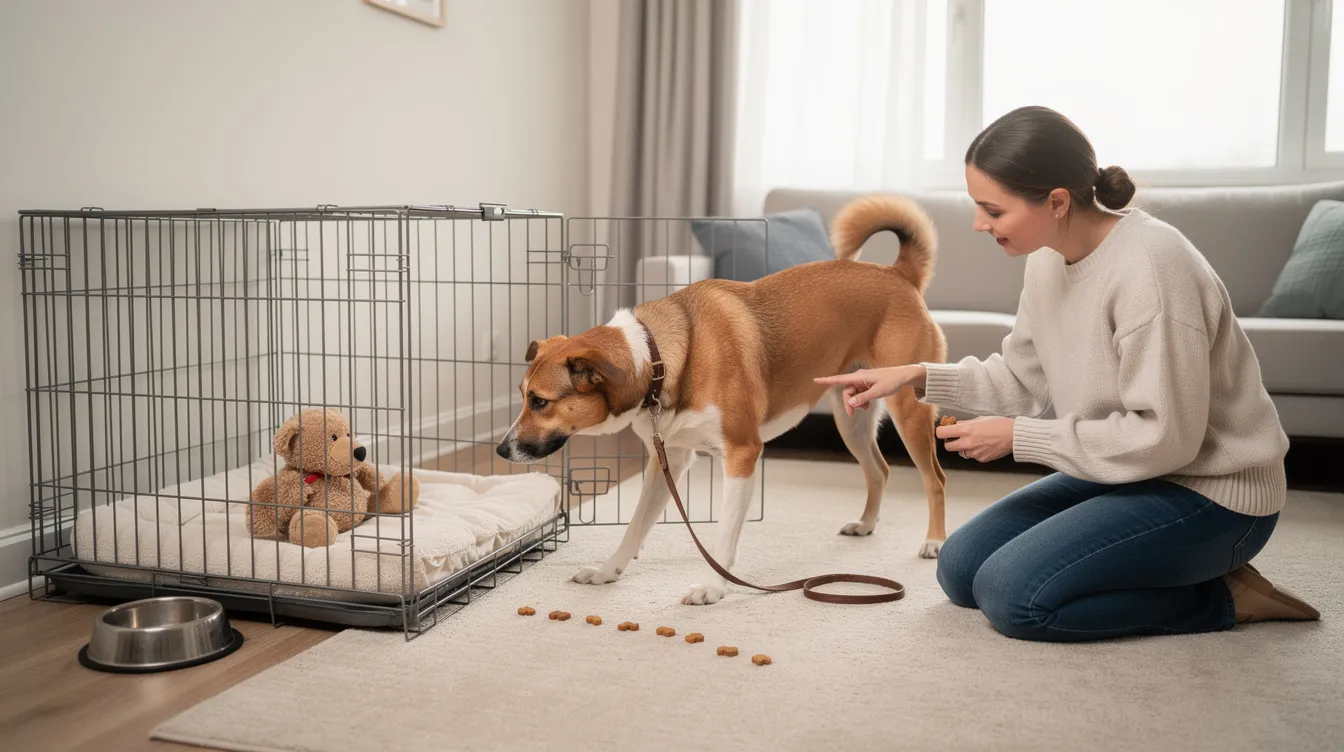
Leave the crate door open for 3–5 days before formal training begins. Simply let the crate exist as furniture in your home. Place a few treats near and inside the crate without asking anything of your dog. Let the dog explore at its own pace-sniffing, investigating, maybe stepping a paw inside. Feed meals just outside the crate, then gradually move the bowl closer to the entrance.
This decompression period is especially critical for rescue dogs. Proper crate introduction creates positive associations for the dog long before any door closure occurs. With this foundation established, the structured training process can begin smoothly.
Step-by-Step Crate Training Process
Building on the preparation phase, the formal training process unfolds across four phases. Crate training should be gradual to avoid overwhelming the adult dog. Every adult dog should be exercised before spending time in a crate-a tired dog is dramatically more receptive to calm confinement.
Phase 1: Introduction and Exploration (Days 1–5)
Once your dog has had a few days to notice the new crate as passive furniture, begin active encouragement. Toss a few treats into the crate without any pressure, commands, or expectations. Let the dog inside at its own pace-never push or lure aggressively. Use high-value treats to encourage crate entry, placing them progressively deeper inside the crate over the next few days.
Feed meals inside the crate to create positive associations, starting with the bowl just inside the entrance and moving it further back as your dog grows comfortable. Use a cheerful verbal cue like “crate time” or “go to crate”-a consistent command helps the dog learn what’s expected. Praise your dog when they enter the crate voluntarily.
Never close the door during this phase. Keep the crate door open at all times. Practice 3–4 times daily for 5–10 minutes per training session. Signs of distress include excessive barking, scratching, or drooling when near the crate-if you see these, you’re moving too fast.
Phase 2: Door Closure Training (Days 6–14)
When your dog reliably enters the crate and eats comfortably with the dog inside, begin door closure practice. Start by gently pushing the crate door to a nearly closed position for a few seconds-literally 30 seconds-while the dog eats high-value treats or works on a stuffed Kong.
Gradually increase time with the crate door closed based on your dog’s comfort level, extending to 5–10 minutes over the next few days. Remain in sight during all closed-door periods. If you notice mild whining, wait for a moment of calm before opening. Ignoring attention-seeking behavior helps during crate training, but always respond to genuine signs of panic or distress-pacing, self injury attempts, frantic pawing, or drooling.
The critical rule: open the door before your dog becomes anxious, not after. You want every experience with the door closed to end positively. If your dog seems stressed at 2 minutes, open at 1 minute 30 seconds. Build success, not endurance.
Phase 3: Duration and Distance Building (Days 15–28)
With your dog tolerating short periods with the door closed calmly, extend crate time to 30 minutes, then 1–2 hours with you still home. During these longer periods, provide enrichment-a Kong filled with frozen peanut butter, bully sticks, or puzzle toys keep the dog occupied and create a positive experience.
Practice leaving the room for brief intervals. Start with stepping out for 30 seconds, then 2 minutes, then 5–15 minutes. Practice leaving and returning without drama-no emotional goodbyes or excited greetings. Building a routine helps adult dogs settle in the crate; aim for consistent crate times aligned with rest periods and overnight sleeping.
Introduce reliable verbal cue training during this phase, rewarding willing entry with treats and praise. Separation anxiety can cause dogs to whine in the crate during this stage-distinguish between mild protest whining (which typically fades within a few minutes) and escalating panic, which requires stepping back to an earlier phase.
Professional Training Comparison
For many dog owners, especially those dealing with a rescue dog’s trauma history or severe anxiety, professional board and train programs can dramatically compress the timeline and improve outcomes.
| Training Method | DIY Approach | Professional Board & Train |
|---|---|---|
| Timeline | 4–8 weeks typical; 8–12+ for trauma cases | 14–21 days for noticeable changes |
| Consistency | Variable, depends on owner schedule | Constant supervision and daily structure |
| Problem Resolution | Trial and error | Expert intervention and behavior modification |
| Owner Education | Self-directed learning | Trainers model best practices and provide follow-up |
A case study from a reactive rescue-a 2-year-old pit mix named Bella-demonstrated marked behavioral improvement within 14 days of a Board & Train program where a structured crate routine was central to the process. The owner reported calmness and reliable behavior around distractions after completion.
Professional help is especially warranted if your dog injures itself trying to escape, shows escalating panic despite weeks of consistent effort, or if both you and your dog are becoming frustrated with stalled progress. Off Leash K9 Training of Murrieta offers specialized programs designed for exactly these situations.
Common Challenges and Solutions
Even with a well-structured training process, adult dogs frequently present challenges that require specific strategies. Here are the most common issues and evidence-based solutions.
Excessive Barking and Whining
Whining in the crate is the most frequent obstacle dog owners face. First, rule out legitimate needs: does the dog need to go outside for potty training? Has it been crated too long? Is the environment too hot or stimulating? Once needs are met, ignore attention-seeking vocalizations-releasing the dog while barking reinforces the behavior. Wait for even a few seconds of quiet, then reward.
White noise machines or calming music can reduce environmental triggers. For persistent vocalization that doesn’t improve after 2–3 weeks of consistent training, consider anxiety-reducing supplements or professional behavior modification, as the issue may stem from deeper separation anxiety rather than simple protest.
Destructive Behavior or Escape Attempts
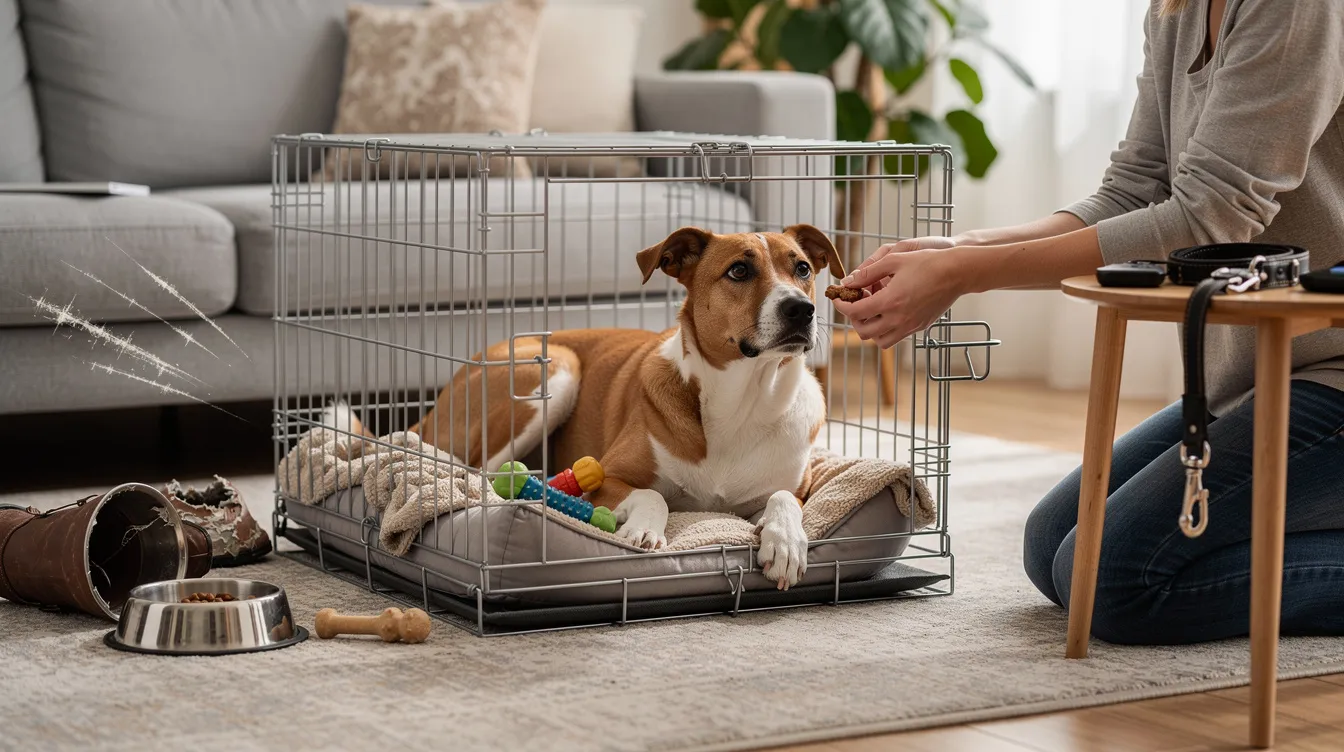
Some dogs may injure themselves trying to escape crates-broken nails, damaged teeth, or paw injuries are serious warning signs. A crate can reduce destructive behavior in dogs, but escape attempts typically stem from high anxiety rather than willfulness. Upgrade to a heavy-duty crate and remove all bedding temporarily to eliminate choking or ingestion risks.
Increase exercise and mental stimulation before crate time to drain pent-up energy. Spending time on a vigorous walk or play session before crating makes a substantial difference. If your dog continues destroying crates or showing signs of self injury, consult a professional trainer-this level of distress requires specialized intervention, not just a stronger crate.
Refusing to Enter the Crate
If your dog repeatedly refuses to approach or enter the new crate, reset training to the earliest phase and slow your progression significantly. Use higher-value treats-real cooked chicken, freeze-dried liver, or whatever your dog finds irresistible. Place treats in a trail leading to the crate entrance, letting the dog explore without any pressure.
For rescue dogs or any dog with an unknown history, refusal often signals a deep negative association with confinement. Consider a professional evaluation for underlying anxiety or past trauma. Some dogs benefit from trying a completely different crate style-switching from a wire crate to a plastic crate, or vice versa-to break the association.
Regression After Initial Success
Regression can occur with schedule changes, moving to a new house, illness, or any disruption to routine. Identify the triggers and return to the previous successful phase. Rebuild gradually-don’t try to jump back to where you were before. Maintain consistent crate entry cues, pre-crate exercise routines, and feeding schedules.
Professional board and train programs help prevent regression through controlled environments and daily structure that reinforces learning continuously. For dogs whose progress has stalled despite weeks of consistent effort at home, an immersive training environment often breaks through plateaus that DIY approaches cannot.
Conclusion and Next Steps
Crate training an adult dog requires patience and consistency, but the results create lasting benefits for both you and your dog. A properly crate-trained adult dog gains a safe place for rest, stays calmer during travel and veterinary visits, avoids destructive behavior when unsupervised, and handles emergencies with less stress. Crate training provides a safe space for adult dogs that serves them throughout their lives.
To get started today:
- Assess your dog’s history and current comfort level around enclosed spaces
- Choose an appropriately sized crate-enough for your dog to stand, turn, and lie down
- Place the crate in a quiet area with the crate door open and begin the no-pressure introduction phase
- Follow the phased approach, never rushing past your dog’s comfort threshold
- Track progress and be prepared to step back to earlier phases when needed
Timeline expectations: Most dogs show meaningful progress within the first 2 weeks, with full comfort typically achieved within 4–6 weeks of consistent practice. Dogs with trauma histories or severe anxiety may need 8–12 weeks.
For related training goals, explore potty training reinforcement, separation anxiety management, and advanced obedience training to build on the foundation crate training provides.
If you’re facing challenges with crate training or want accelerated results through a structured Board & Train program, contact Off Leash K9 Training of Murrieta for a free consultation. Our trainers specialize in working with adult dogs-including rescues and dogs with complex behavior issues-to achieve reliable results in a fraction of the typical timeline.