
Key Takeaways
- Door rushing is a safety risk because a dog can run into traffic, knock over visitors, slip past children, or become lost.
- Dog door manners training teaches impulse control, calm behavior, and a clear pause at the front door and every doorway.
- Sit, stay command, place command, recall, leash manners, and a clear release word are the foundation for good door manners.
- Consistency matters at every closed door, open door, backyard gate, and car door, so your dog does not rehearse bolting.
- If the situation feels unsafe or overwhelming, professional dog training help is available before the habit becomes harder to manage.
Dog door manners training helps stop door rushing by teaching your dog to pause, think, and wait for permission before moving through a threshold. Instead of charging ahead when the door open moment happens, your dog learns that calm behavior earns access.
Many owners know the scene well. The doorbell rings, guests arrive, your pup launches toward the front door, and everyone tries to grab a collar, block with an arm, or keep legs and feet out of the way. With structure and practice, that chaos can become a predictable routine.
Good door manners improve safety, control, and confidence for both dog and owner. For owners looking for structured obedience support, Off Leash K9 Dog Training Murrieta can help build better manners around everyday distractions.
Why Dog Door Manners Training Matters
Dog door manners training is not just about being polite. It is about preventing dangerous, stressful moments before they happen.
Dogs that rush through doors are at risk of getting injured, running into traffic, slipping past family members, or becoming lost. Teaching your dog to pause at doorways gives you more control before the door opens and helps prevent unsafe moments from becoming habits.
A dog that bolts through the front door, back door, garage, or gate can create a stressful situation quickly. Door manners give your dog a clear routine, so they learn that an open door does not automatically mean they can rush outside.
Good manners also make daily life easier. A dog that waits calmly at the door can help create a more organized and less chaotic environment, making it easier to manage daily activities like bringing in groceries or laundry.
Consistent routines at the front door, back door, garage, and car doors teach your dog to wait until they are released. Over time, your dog learns that calm behavior and permission come before moving through a doorway.
Training your dog to wait at the door fosters emotional self-control, which can translate to better behavior in other situations, reducing impulsive actions. In busy neighborhoods, this kind of dog obedience supports safer walks, better leash control, and more reliable behavior around distractions. Owners who need more structure can explore dog training for help with obedience, impulse control, and real-world manners.
Why Dogs Rush Through Doors
Most door rushing has a reason behind it. Understanding the cause helps you teach the right replacement behavior.
Excitement is common. Dogs often learn that an open door means a walk, guests, freedom, or a car ride. If charging ahead has worked before, the behavior feels rewarding.
Lack of impulse control is another factor, especially for a puppy or an undertrained pet. Some dogs have never learned that the door is a boundary, not an automatic invitation.
Habit matters too. If your dog has bolted once and found something fun outside, that moment can reinforce the behavior. Practice makes perfect, even when the behavior is unwanted.
Fear or anxiety can also cause rushing. A dog may try to escape loud noises, visitors, or pressure in the house. If your dog bolts when startled, focus first on safety, management, and calm practice away from the open door before adding harder doorway training.
Inconsistent rules make learning harder. If one person lets the dog pull through the doorway and another scolds, the dog does not know what good behavior looks like.
Basic Skills That Help Stop Door Rushing
Door manners are easier when your dog already understands a few obedience basics.
Sit, stay, and wait can all support better door manners. In many training plans, “wait” is used as a short pause before moving forward, while “stay” asks the dog to hold position until released. The most important part is that your dog understands the cue clearly and follows the same rule every time.
For door manners, the cue should be simple and consistent. Whether you use “wait,” “stay,” or another word, your dog should learn that they cannot move through the doorway until you give a clear release. The place command can send your dog to a bed, mat, or floor target away from the doorway. This helps create space when guests arrive and gives your dog a clear job instead of jumping, barking, or crowding the door. A release word should only be used when it is safe and appropriate for your dog to move forward.
Recall is your safety backup. A dog that can turn their head, come away from the front door, and return to you from a few feet away is less likely to slip into the driveway.
Leash manners and heel position help because a dog who can walk without a constant pull is easier to guide at any doorway. Impulse control games, like waiting for food, toys, or permission to pass, also support threshold training.
How to Practice Door Manners at Home
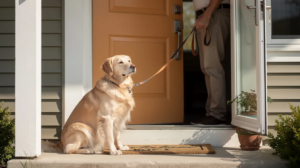
Start simple. To train your dog to wait at the door, start by having them on a short leash and practice approaching a closed door without them rushing through it.
Ask for sit, stand calmly, or wait a few feet back. Touch the handle. If the dog moves forward, calmly close the door and reset. Using a short leash while approaching a closed door can help prevent a dog from rushing through when the door opens, allowing them to learn to wait patiently instead.
A good method for teaching door manners involves gradually opening the door while ensuring your dog remains calm and does not attempt to rush through. Start slightly open, then a few inches wider. Training a dog to remain calm while the door is open can be achieved by gradually increasing the door’s opening while rewarding the dog for staying composed.
Use a distinct release word like “Okay,” “Free,” or “Break” to signal that your dog can pass through the doorway. The goal is to teach your dog that an open door does not mean they can move forward until they hear their release cue.
If your dog has access to a backyard door or gate, practice the same rules there too. Ask for a pause before opening the door, reward calm behavior, and release your dog only when they are not pushing forward or trying to rush past you.
For dogs that rush forward quickly, begin with very small steps. Touch the handle, crack the door open slightly, then close it again if your dog moves forward. Reward the moments when your dog stays calm, checks in with you, or holds the cue near the doorway.
Once your dog can wait calmly, practice stepping through the doorway together. Release your dog only after they stay composed, then continue guiding them with leash control, recall, or heel so good manners continue after they cross the threshold.
Keep sessions short and simple. Five to ten minutes of focused practice is often enough, especially when your dog is still learning. End on a calm success, then repeat the routine at different doors as your dog becomes more reliable.
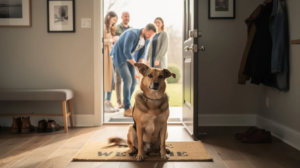
Finally, repeat at every doorway. Practice at the front door, back door, garage, and car doors. Add mild distractions, like when the doorbell rings, a neighbor walks by, or guests arrive.
Common Mistakes to Avoid
Avoid yelling. Frustration can raise arousal and confusion instead of teaching calm, polite behavior.
Do not rush the process. Going straight to a busy front door with guests before your dog can handle an inside doorway is too much, too soon.
Do not allow “just this once” bolting. Every successful dash teaches your dog that rushing might still work.
Avoid holding a constant tight leash. It can create opposition and more pull. Use the leash for safety, keep personal space, and calmly block forward motion as needed.
Make sure the whole family uses the same cue, wait cue, release word, and rules. Children should never physically block the dog.
Final Thoughts
Dog door manners training is a vital skill that enhances safety and harmony in your home. By teaching your dog impulse control and calm behavior at every threshold, you reduce risks and build a stronger bond. Remember, consistency, patience, and clear communication are key.
If you find the process challenging or want expert guidance, consider reaching out to a professional trainer . Early support can make a big difference in preventing door rushing from becoming a difficult habit.
Start today by practicing simple steps at your next doorway. With steady effort, your dog can learn to wait calmly, making every entrance and exit a safer, more peaceful experience for everyone involved.
FAQ
These training tips answer common questions about door manners, safety, and everyday practice.
How long does dog door manners training usually take?
Many families see early progress within a few days of consistent practice, but reliable door manners can take longer. The timeline depends on the dog’s age, history, excitement level, environment, and how consistently the household follows the same rules.
Can I teach door manners if I have more than one dog?
Yes, but start with one dog at a time. Train the calmer dog first, then add the second dog once each can hold a sit, wait, stay, or place near the closed door. Crates, baby gates, and separate leashes can help keep practice organized.
How should I involve my kids in manners training?
Adults should lead at first. Children can help later by ringing the doorbell or pretending to be visitors while an adult handles the dog. Kids should learn not to open the door unless an adult is present and the dog is on leash, in place, or safely separated.
What if my dog panics when the doorbell rings?
Panic, barking, or charging may mean fear or over-arousal. Start by playing the doorbell sound at a low volume, then reward calm behavior, place work, or quiet focus. Increase the sound gradually only when your dog can stay relaxed.
When should I consider professional help for door rushing?
Get help if your dog has already escaped, you live near busy streets, your dog is large or powerful, or you feel physically overmatched. A trainer can work on obedience, impulse control, recall, leash manners, and door manners in real-world settings.