
Bringing home a new puppy is exciting, but it also comes with a job: teaching clear house rules from day one. Puppy potty crate training helps your pup learn where to potty, when to rest, and how to feel secure in a new environment.
With the right plan, puppy potty training and crate training can work together to create good habits, reduce accidents, and make daily life more predictable for both you and your dog. For owners who need extra guidance, Off Leash K9 Dog Training Murrieta can help build better puppy manners and structure from the start.
Key Takeaways
- Start puppy potty training and crate training early, so your new puppy learns house rules before habits form.
- A consistent potty schedule, close supervision, and immediate rewards help prevent accidents and build routine.
- A crate can support house training, calm behavior, and rest when it feels like a safe space, not punishment.
- Young puppies need frequent potty breaks, short periods of crate time, and patient repetition.
- Professional puppy training can be helpful when dog owners feel stuck, overwhelmed, or unsure how to adjust the plan.
Why Puppy Potty Crate Training Matters
Puppy potty crate training combines house training and crate training into one clear daily routine. Instead of reacting to every accident inside, you create a structure that helps your puppy understand when it is potty time, when it is time to play, and when it is time to sleep.
Start early, ideally within the first 24 to 48 hours after bringing a new puppy home. Early structure does not need to be harsh. It simply helps your pup learn good habits before repeated accidents become normal in the house.
Potty training your puppy provides a foundation for good behavior, helps them establish a routine, and keeps your house cleaner. The key to successful housetraining is repetition, supervision, and immediate rewards. Some puppies learn quickly, while others need more time and consistency before outdoor potty habits become reliable.
Puppies have small bladders and limited control. A common guideline is that puppies may be able to hold it for about one hour per month of age, but every puppy is different. Many young puppies need more frequent potty breaks, especially after meals, water, naps, play, or excitement.
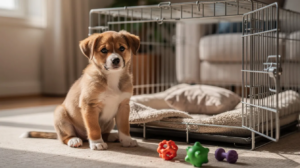
Crate training can also support house manners when it is introduced slowly and positively. A properly sized crate can give your puppy a safe place to rest and can help prevent accidents or unsafe chewing when you cannot supervise. The crate should feel calm and secure, not forced or used as punishment.
Use the same spot outside, the same cue words, and the same routine. This predictability builds confidence for puppies and dog owners. Mistakes are normal, but consistency, rewards, and calm responses keep the process on the right track.
How To Build A Potty Training Routine
A written potty schedule helps prevent accidents and keeps everyone in the household consistent. If one person waits two hours and another waits four, training a puppy becomes confusing.
A basic day may look like this:
| Time | What to do |
| 6 to 7 a.m. | First potty break immediately after waking |
| After meals | Take the puppy outside after food and drinking |
| After naps | Go outside immediately after rest |
| After a play session | Watch closely and go out right away |
| Before bed | Final calm potty trip at night |
A consistent routine helps puppies understand when and where they should go potty. Take your puppy outside after waking, eating, drinking, playing, and resting so they have frequent chances to eliminate in the right place.
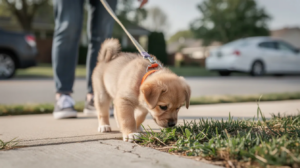
Take your puppy outside on a leash to the same spot. Use one or two simple cues such as “go potty” or “hurry up.” When your puppy finishes in the correct outdoor spot, give immediate rewards with high-value treats and praise to create positive associations. Praising a puppy for eliminating in the right spot is more effective than scolding them for accidents, as positive reinforcement encourages the desired behavior.
Watch for early warning signs: sniffing, circling, pacing away from people, suddenly stopping play, whining, or heading toward the door. Some puppies need to go out every time they play or get excited, so monitor your puppy’s individual signals and rhythms.
For the first 1 to 2 weeks, keep a simple log of meals, water, potty trips, pee, poop, and every accident indoors. This helps you adjust the schedule instead of guessing. If you work long hours, a trusted dog walker can help maintain a routine during the day.
Feed on a regular timetable when possible, such as breakfast, lunch, and dinner at predictable times. Some owners limit large amounts of water close to bedtime to help manage nighttime potty breaks, but puppies should still have proper access to water during the day. Ask your vet for guidance if your puppy drinks heavily, has health concerns, or seems unusually thirsty.
At night, keep trips boring and brief. Go outside, allow potty, reward quietly, and return to bed. Avoid turning a nighttime potty break into a long walk or play session.
Crate Training Tips For Puppies
Crate training means helping your puppy view the dog’s crate as a calm, secure place. When introduced slowly, the crate can become a safe space for rest, not a place of isolation.
Choose the right crate. A crate should be large enough for your puppy to stand up, turn around, and lie down comfortably, but not so big that they can use one corner for elimination and settle down away from the mess. For growing puppies, use a divider as the puppy grows. Wire crates offer airflow and visibility, while plastic crates may feel more enclosed. Some homes use two crates, one in the bedroom and one in the family area.
Place the crate in a quiet area of the home where your puppy can feel safe and comfortable, while also being close enough to family activities to avoid isolation. During the day, a quiet corner of a living room often works well. At night, place it near the bed so you can hear if your puppy needs a potty break.
To start crate training, keep the door open and let your puppy explore at their own pace. Toss treats inside, feed near the crate, then feed meals inside. Gradually close the door for short periods while your pup is calm. Introducing your puppy to the crate should be done gradually, allowing them to explore it at their own pace and using treats to create positive associations with the space.
Make crate time pleasant. Add a washable bed or mat if your puppy will not chew or shred it, and offer safe crate-friendly toys or treats when appropriate. Always check that any chew, toy, or bedding is not a choking hazard and matches your puppy’s chewing habits.
A basic crate training routine can follow a simple cycle of potty break, playtime, food, crate time, and release. When you schedule crate time, keep it age-appropriate. Very young puppies may only handle short periods, while older puppies may manage longer stretches, but they should not be left longer than they can comfortably hold their bladder or stay calm.
Too much crate time can create stress and make the crate feel negative. Young puppies need plenty of supervised time outside the crate to play, train, explore, bond with people, and practice calm behavior in the home.
Some whining can happen while a puppy is learning. If the sound is brief, wait for a calm moment before opening the door so your puppy does not learn that barking or whining always opens the crate. If the crying is intense, persistent, or unusual, check for potty needs, discomfort, fear, or whether the crate time is too long.
Never use the crate for punishment, as this can lead to fear or stress around the crate. The crate should connect to rest, safety, and a calm, stress-free routine.
Common Mistakes To Avoid
Avoiding a few common potty training and crate training mistakes can save weeks of frustration.
Common mistakes include:
- Waiting too long between each potty break.
- Giving free run of the house too early.
- Failing to supervise after meals, water, or play.
- Skipping rewards after successful potty trips.
- Allowing access to rooms where you cannot watch your puppy.
Use baby gates, closed doors, or a leash tether during supervised free time. Adult dogs may handle freedom well, but puppies need structure until house training is reliable.
Scolding or physical punishment after an accident inside creates confusion, fear, and hiding behavior. Most puppies do not understand delayed punishment. Calmly clean the mess and improve the plan.
Inconsistent rules also slow progress. For example, puppy pads may help in apartments, severe weather, or mobility challenges, but switching between pads and outdoor-only potty without a clear plan can confuse your dog.
Crate mistakes matter too. An oversized crate can encourage an accident inside. Only crating when you leave the house may teach the puppy that the crate predicts separation. Leaving the puppy for longer periods than they can handle can cause stress and more accidents.
Clean every accident thoroughly with an enzymatic cleaner so odor does not pull the puppy back to the same spot. If accidents continue despite a solid routine, supervision, and clean-up, contact your vet to rule out urinary, digestive, or other medical issues.
Final Thoughts
Puppy potty crate training is a valuable foundation for your puppy’s lifelong good behavior and comfort at home. With patience, consistency, and a clear routine, you can help your puppy develop healthy potty habits and view their crate as a safe, calm retreat. Remember that supervision, positive rewards, and avoiding punishment are key to building trust and confidence.
If you feel unsure or overwhelmed at any point, professional puppy training support can make a big difference. Don’t hesitate to seek guidance to set your puppy up for success and enjoy a happy, well-trained companion
FAQ
These common questions come up often during puppy potty crate training. Use the answers as a starting point, then adjust for your puppy’s age, health, and temperament.
How soon should I start potty training and crate training my new puppy?
Start the first day your puppy comes home. The first morning and first night are important because they begin the routine.
Early training should be gentle. Focus on frequent potty trips, short periods in the crate, rewards, and letting your puppy explore the crate at their own pace.
What if my puppy keeps having accidents even with a schedule?
Add more frequent potty breaks and increase supervision during free time. Review meals, evening water, visitors, rough play, and other excitement triggers.
If accidents are sudden, frequent, or out of character, ask a vet to rule out medical issues.
How can I help my puppy if they cry in the crate at night?
Some crying can be normal while your puppy adjusts to a new home and routine. Keep the crate near your bed, make it comfortable, and keep the top partly covered if that helps your puppy settle and does not make them more worried.
If crying is intense, take your puppy out for a quiet potty trip, then return calmly to the crate. Reward calm moments so your puppy learns that settling, not constant crying, leads to attention and release.
Should I use puppy pads while house training?
Pads can be helpful in high-rise apartments, severe weather, or special situations. However, they can slow outdoor house training if there is no clear plan.
If you use pads, gradually move them closer to the final outdoor potty area. If you want outdoor-only training, stay consistent from the start.
When should I consider professional help for potty or crate training?
Consider professional training if accidents remain frequent after several weeks of routine, rewards, and supervision.
Help is also useful for ongoing crate distress, separation issues, anxiety around the dog crate, leash manners, or early obedience problems.